
All You Need to Know About Investing in 5 Definitions
Key Takeaways
The financial industry thrives on making things sound complicated.
Some of the best investing options happen to be the easiest to understand.
The average person can access investing education for free and start investing with as little as $1.
Have you ever started to learn about investing, only to get lost in a sea of jargon? The technical terms make investing feel overwhelming. No wonder so many people lack confidence.
Here’s the truth: you don’t need to know everything to be a successful investor. In fact, you only need to understand a handful of simple terms. If you tune out the intimidating language and grasp the key concepts, you’ll know enough to invest wisely.
Why Investing Language Feels Intimidating
The financial industry thrives on making things sound complicated. Sometimes that’s intentional. Complexity sells. When people feel confused, they assume they need experts to handle everything for them.
I worked with a couple whose financial advisor told them, “You can’t understand this stuff. This is what I do for a living!”
Which would have been fair if it were true. But it’s not true!
There are plenty of problems best left to the experts. We recently found carpenter ants in our house. As much as I wished for a DIY solution, everything I read said to call a professional exterminator, which we did. In a matter of minutes, the exterminator applied a treatment we wouldn’t have figured out on our own.

I found carpenter ants burrowing in my back deck.
There’s a possible world in which investing requires expertise. Thankfully, it happens not to be our world.
Don’t get me wrong. There’s plenty of complexity in the financial realm. But getting in on the action doesn’t require complex understanding. Some of the best investing options happen to be the easiest to understand.
What is Investing?
Investing: spending money on something that grows more money
You can invest time to deepen a friendship. You can spend money to enhance the beauty of your home.
But when talking about finances, reserve the term “investing” for purchases that ultimately grow more money.
What are Stocks?
Stocks: pieces of ownership of a business
Buy Apple stock, and you become a part-owner of Apple. If Apple makes profits and grows, your share becomes more valuable.
Stocks have high potential for growth. Their value moves up and down daily.
What is a Fund?
Instead of picking stocks one by one, you can purchase them in a bundle.
Fund: a “basket” of investments
Instead of relying on one or two stocks, a fund gathers a wide variety, which is called “diversification.”
Two common, similar types of funds:
Mutual Fund
ETF (Exchange-Traded Fund)
Index: a measure of the performance of a group of investments
For example, “S&P 500” is an index that tracks the top 500 stocks.
Index fund: a fund that copies the performance of an index
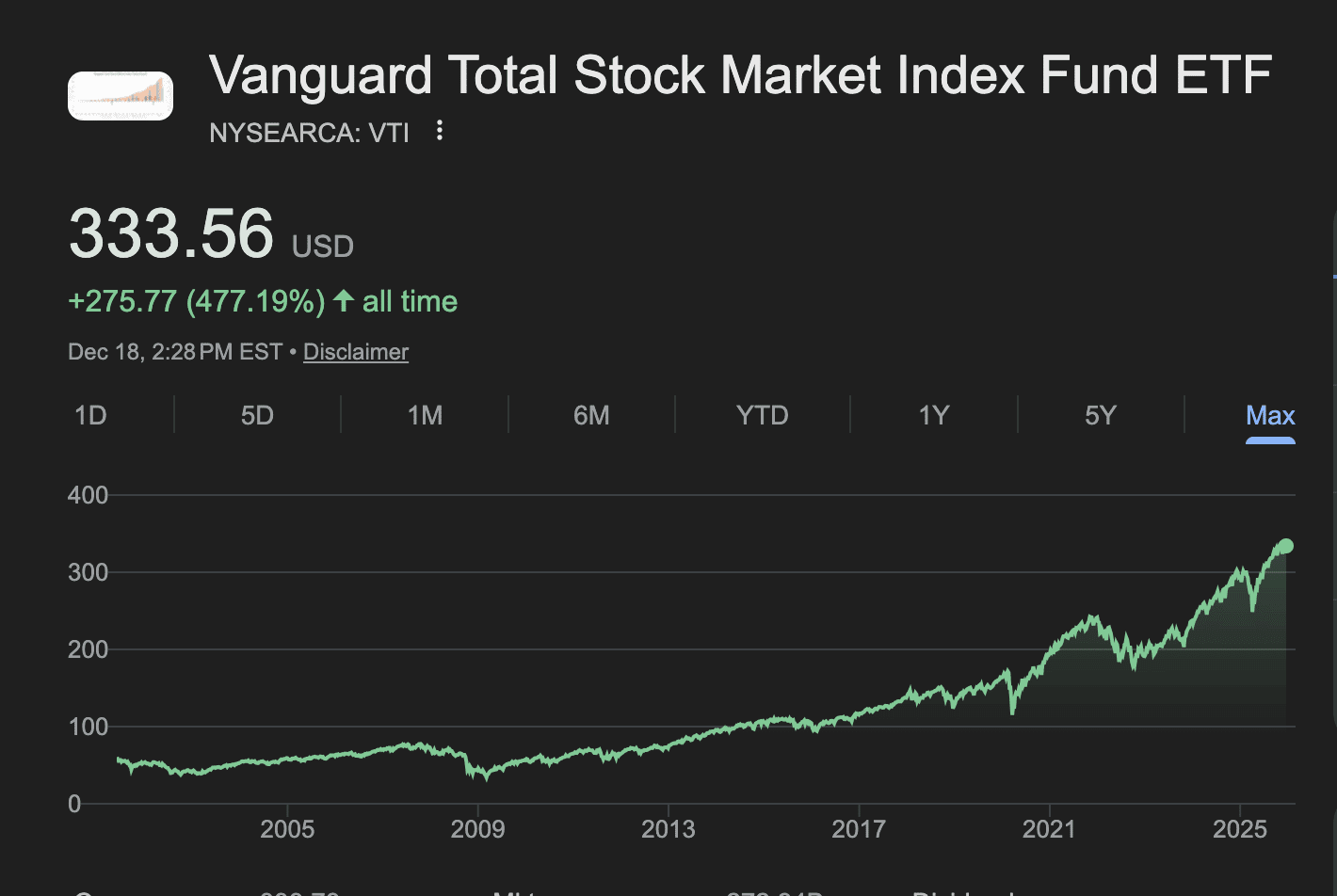
For example, Vanguard funds VOO, VTI, VTSAX and Fidelity fund FZROX.
No More Gatekeepers
In the past, if you wanted to invest, you had to approach a professional who acted as a gatekeeper. If you still view investing as out-of-reach, know this: things have changed. These changes mean that the average person can access investing education for free and start investing with as little as $1.
Watch my playlist of helpful investing videos.
Don’t listen to the voices that make you feel more confused the more you hear.
Cling to these five definitions. They can take you far.
Investing: spending money on something that grows more money
Stocks: pieces of ownership of a business
Fund: a “basket” of investments
Index: a measure of the performance of a group of investments
Index fund: a fund that copies the performance of an index
There are plenty of other terms you might find handy. Learn them if you like. But can you get started without them? Absolutely. Don’t forget: you don’t need complex knowledge in order to start investing.
The Bottom Line
Don’t let jargon scare you away from investing.
Growing money-strong doesn’t require knowing every detail, but getting started!
