
Set It and Forget It: Why Automatic Saving Beats Willpower Every Time
Key Takeaways
Systems are more reliable than willpower.
Automatic saving lets you pay yourself first.
Your money can start working for you, quietly and consistently, in the background.
Most people want to save money. But when you look at the numbers, few actually do it consistently.
Why? Because they’re relying on willpower.
The truth is, willpower isn’t a strategy—it’s a limited resource. After a long day of work, decisions, and life, it’s easy to “decide” to save tomorrow instead of today.
That’s why the most effective savers don’t rely on willpower at all. They rely on systems. And one of the best systems is automatic saving.
Why Willpower Isn’t Enough
Here’s the problem with willpower-based saving: it assumes you’ll always make the best choice.
But life happens. Surprises come along. That new purchase feels more urgent than putting money away for the future.
Three common traps make willpower unreliable:
Leftover Mentality
You might say you’ll save “whatever’s left” at the end of the month. But when saving comes last on the list, there’s rarely anything left.
Present Bias
Our brains value today’s wants more than tomorrow’s needs. It’s easier to justify dinner out now than to save for an emergency fund you might need later.
Decision Fatigue
Every day, you make dozens of money-related decisions. By the time you get to saving, your willpower tank is empty.
The result? Inconsistency. And inconsistency is the enemy of building savings.
The Power of Automatic Saving
Automatic saving flips the script. Instead of waiting to see what’s left, you pay yourself first.
It’s consistent. Transfers happen automatically on payday, before you spend.
It’s painless. Out of sight, out of mind—you don’t miss what you never see.
It builds momentum. Even small amounts add up quickly and motivate you to keep going.
Think of it like watering a tree with a slow-drip watering bag system. You don’t have to remember to do it every day. The system works in the background, and over time, you grow something strong and healthy.

The hardest system isn't always the most effective, with saving money or watering trees.
When we take care of a tree, the goal is to see a strong, healthy tree. Not to create as many tasks for ourselves as possible. It’s the same with money. Why stand there with a watering can when you can use a nifty tree watering bag?
How to Set Up Automatic Saving
Automatic saving is simple to set up. Here’s how:
Open a Separate Savings Account
Keep it separate from checking so you’re not tempted to dip into it.
Pick a Goal
Decide what you’re saving for: emergency fund, vacation, home purchase, or simply peace of mind.
Set Up a Transfer
Through your bank or employer, set up a direct deposit or automatic transfer.
Start Small
Maybe you automate $800 of savings per month, or maybe you automate $80. Either way, you’ve adopted a key habit of those who are strong with money.
Let It Run
Don’t obsess over it. The beauty of automation is that it works without your constant attention.
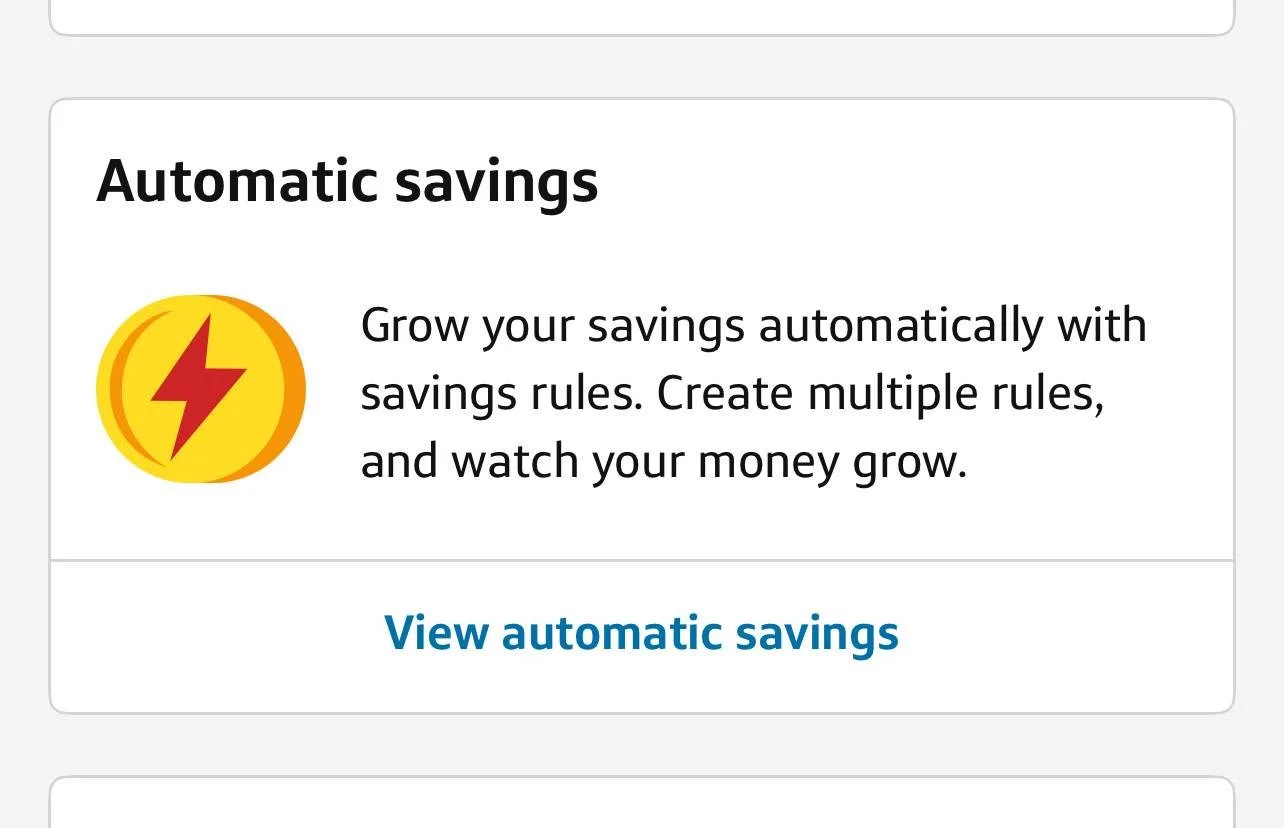
My Capital One account encourages me to automate savings.
Common Myths About Automatic Saving
If you’ve never saved automatically, you might have doubts. Let’s bust some common myths:
“I don’t make enough to save.”
Start with an amount you know you can handle. Focus on building the habit. Once the system is in place, you can scale it up.
“I’ll forget it’s there.”
Exactly. That’s the point. Money that’s out of sight grows quietly until you need it.
“I’ll miss the money.”
Most people adapt their spending to what they have to work with. You might get used to it quickly. But if you discover that your spending behaviors are incompatible with your savings goals, at least you’ve gained that important awareness. Your choices: increase your income, reduce your expenses, or shrink your savings goals.“I feel in control when I do things manually.”
You’re still in control. Setting up automation doesn’t stop you from checking your accounts. You can always pause or cancel the automation as needed.
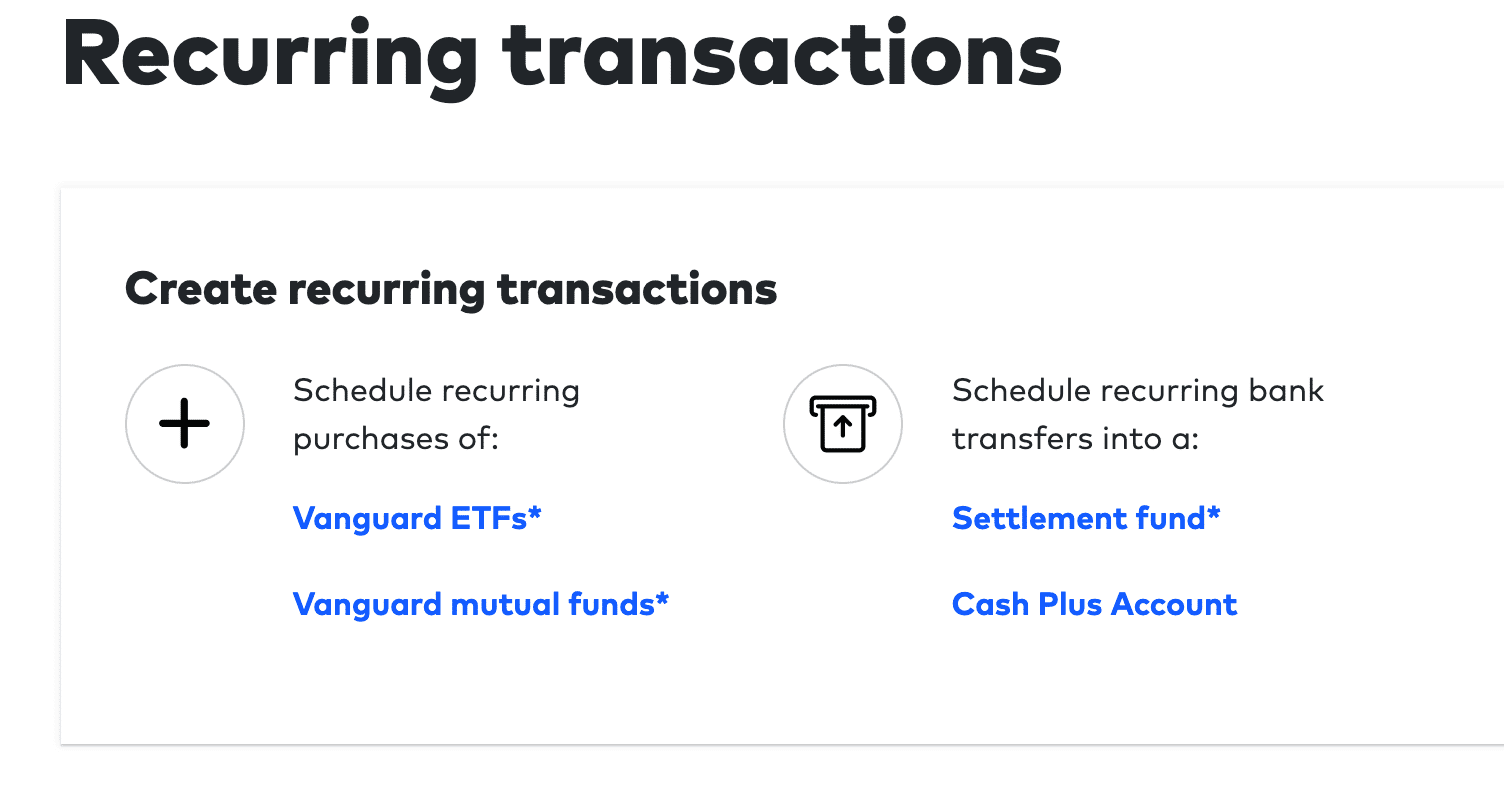
My Vanguard account shows me how to set up recurring transfers.
Start Now
When “future you” gets hit with an unexpected expense, “future you” will wish that the you of today had implemented automatic savings… today!
Imagine a financial need pops up in your life this week. Ugh.
Now imagine a surprise visit from a familiar face– it’s you from two years ago! That smarty pants says, “It’s gonna be ok. I set up automatic savings of $800 each month, so I’ve got this covered. Here’s $20,000 for you!” Talk about self-care!

When you automate savings, you prepare a gift for your future self.
If you would appreciate a gift like that from 2-years-ago-you, imagine how 2-years-from-now you will feel about the decision you make today. It’s too late to change the past, but you can still take care of your future self.
Real-life Results
I worked with a couple facing $60,000 of student loan debt. After years of paying the minimum and not seeing progress, we sat down together. They decided they wanted this burden out of their lives. They learned to track their income and expenses, so each month they could pay as much extra as possible toward debt.
In this season of focused debt pay-down, savings wasn't their priority. But we talked through the benefits of a small, almost symbolic automatic transfer into savings, a kind of foot in the door.
If they implemented the system now, they wouldn't kick the can down the road. They wouldn't just hope their future selves remembered to become savers some day.
So they set up an automatic transfer of just $50 each month. After 12 months, they had an extra $600 buffer in their savings account. That's not the exciting part.
All their future selves have to do is bump that number up. When their income increases and their debt is gone, imagine they save $1,000 a month. After 5 years, they'd look up to see $60,000-- enough to turn a crisis into an inconvenience. Their automatic savings habit might not look powerful now. But over time, it will prove life-changing.
The Bottom Line
Willpower might get you started, but it won’t get you far. Systems will.
When you set up automatic saving, you take the pressure off yourself. Your money starts working for you, quietly and consistently, in the background.
And that’s how small steps turn into big results.
