
When is the Best Time to Invest? Don’t Just Follow the Crowd
Key Takeaways
You might try to join the good days and skip the bad days. But in the process, you unintentionally miss out on good days and get caught up in bad days.
Staying invested long-term means you follow a steady strategy, independent of emotional reactions to the latest headlines.
When you base your investing strategy on long-term trends rather than short-term fluctuations, you no longer look for the best times to get in and out.
I love amusement parks.
I’m thankful to spend my summers close enough to Cedar Point to visit often.
I recently planned to go with my kids and a few of their friends. According to the forecast, we could pick a rainy Saturday or a Sunday without a cloud in the sky. At first glance, the sunny day looked like the obvious choice.

I was next in line waiting for the roller coaster Maverick to restart after a weather delay, September 12, 2026
But decades of experience have taught me something a little counterintuitive: The best day to go to the park is often when the weather isn’t perfect.
When the most popular time isn’t the best time
Rain usually doesn’t last all day, and a rainy forecast scares away some visitors.
Fewer visitors mean shorter lines. Shorter lines mean more rides, and more fun!
So when I see rain in the forecast, I think, “This could be a great day to go to the amusement park!”
We chose the rainy day. We enjoyed quick-moving roller coaster lines throughout the morning and afternoon, fitting in a good number of rides before we eventually got a refreshing downpour.

Waiting out a storm in the arcade at Cedar Point, August 2026
Sometimes the timing that looks best isn’t really best— because it also looks best to everyone else.
Which reminds me of investing.
When is the best time to buy or sell investments?
“Timing the market” is an approach to buying and selling stocks. Those who take this approach try to predict the future in order to buy assets before they rise in value and sell them before their value falls.
They can’t actually predict the future, so they often go with their gut: How am I feeling about the stock market right now?
An easy way to try to envision the future is to project the present onto it.
When the market is trending upward, they picture that trend continuing, so they want to get in. When the market is declining, they see the decline continuing into the future, so they want to get out.
After all, who’s attracted to an investment that’s struggling? Who wants to drop an investment that’s thriving?
The most popular timing comes at a cost
What looks like the best time to buy stocks might not be, for the same reason that what looks like the best day to go to the amusement park might not be: everyone else might have the same thought.
At Cedar Point, greater popularity means bigger crowds and longer lines.
With the stock market, greater popularity means greater demand and higher prices.
You might try to join the good days and skip the bad days. But in the process, you unintentionally miss out on good days and get caught up in bad days. Emotions can lead you to buy when prices are high and sell when prices are low.
Real life market timing
I spoke with a couple as a financial coach. One spouse said, “I know I’m not supposed to do this, but sometimes when I hear the news, I log in to my retirement account and get out of my investments for a week or two, until the headlines look better.”
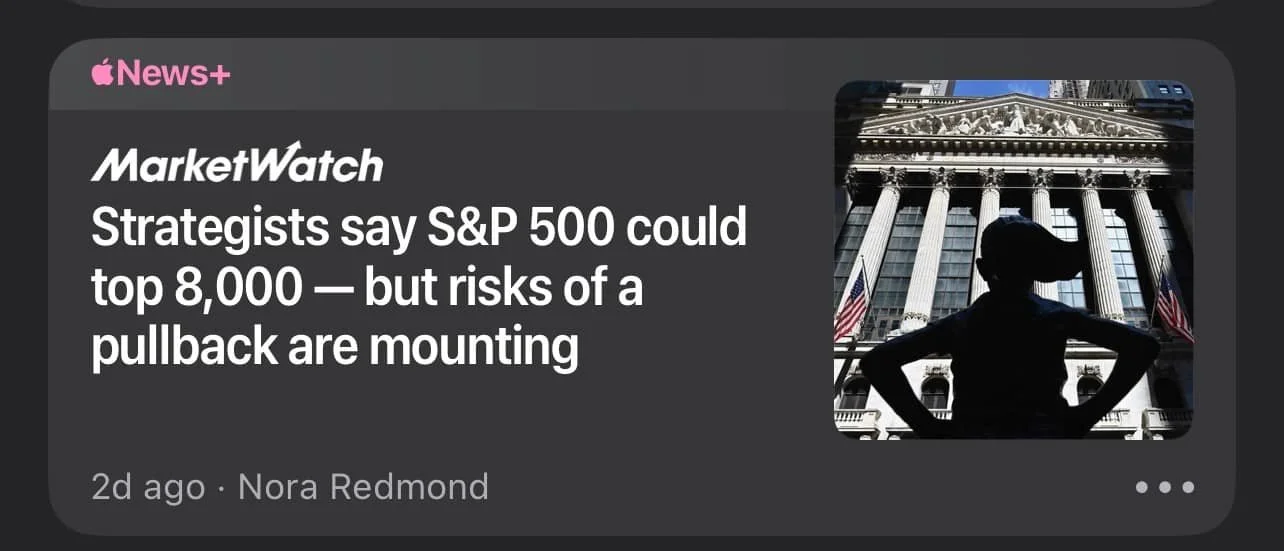
Headline: "Strategists say S&P 500 could top 8,000-- but risks of a pullback are mounting.
In their head, they knew it was unwise to time the market, but feelings drove them to do it anyway.
After years of timing the market, their retirement account balance was lower than it would have been if they just hadn’t messed with it at all, leaving their funds invested through the ups and downs.
When your gut tempts you to try to pick the best timing, it can lead you astray.
Staying invested long-term means you follow a steady strategy, independent of emotional reactions to the latest headlines. Warren Buffett recognized this as the need to be “fearful when others are greedy and greedy when others are fearful.”
You don’t need to predict the right timing
Assuming you can’t spend every day at the amusement park, you need to decide which time to visit.
Investing is different. You can stay invested every day with little regard for timing.
Many successful investors choose not to waste time trying to predict the future. Instead, they consistently buy and hold investments— both when the short-term outlook seems great and when the headlines make everyone nervous.
The opposite strategy: ignore timing
“Buy-and-hold” is the opposite approach to timing the market. When you buy and hold, you try to enjoy the ups and downs. You emotionally accept the daily volatility. The hope is that with enough time, your investments will benefit from long-term growth and compounding.
Dave Ramsey says, “The only people who get hurt on a roller coaster are the ones who jump off in the middle,” meaning that the safest way to invest is to stay in over the long haul, riding the ups and downs.
When the market is up, you can enjoy seeing a higher balance in your investment accounts— just like you enjoy a gorgeous, crowded day at the amusement park.

Nick and Lesley at Cedar Point on a stormy day, July 2025
And when the market is down, you can enjoy the chance to buy stocks at a lower price— just like you enjoy shorter lines on a rainy day at the amusement park.
Read more: Why Time in the Market Beats Timing the Market
No joke— I find myself writing this while in line for the roller coaster Maverick at Cedar Point during a rain delay that started when I was about to load! (Update: I eventually got to ride!)
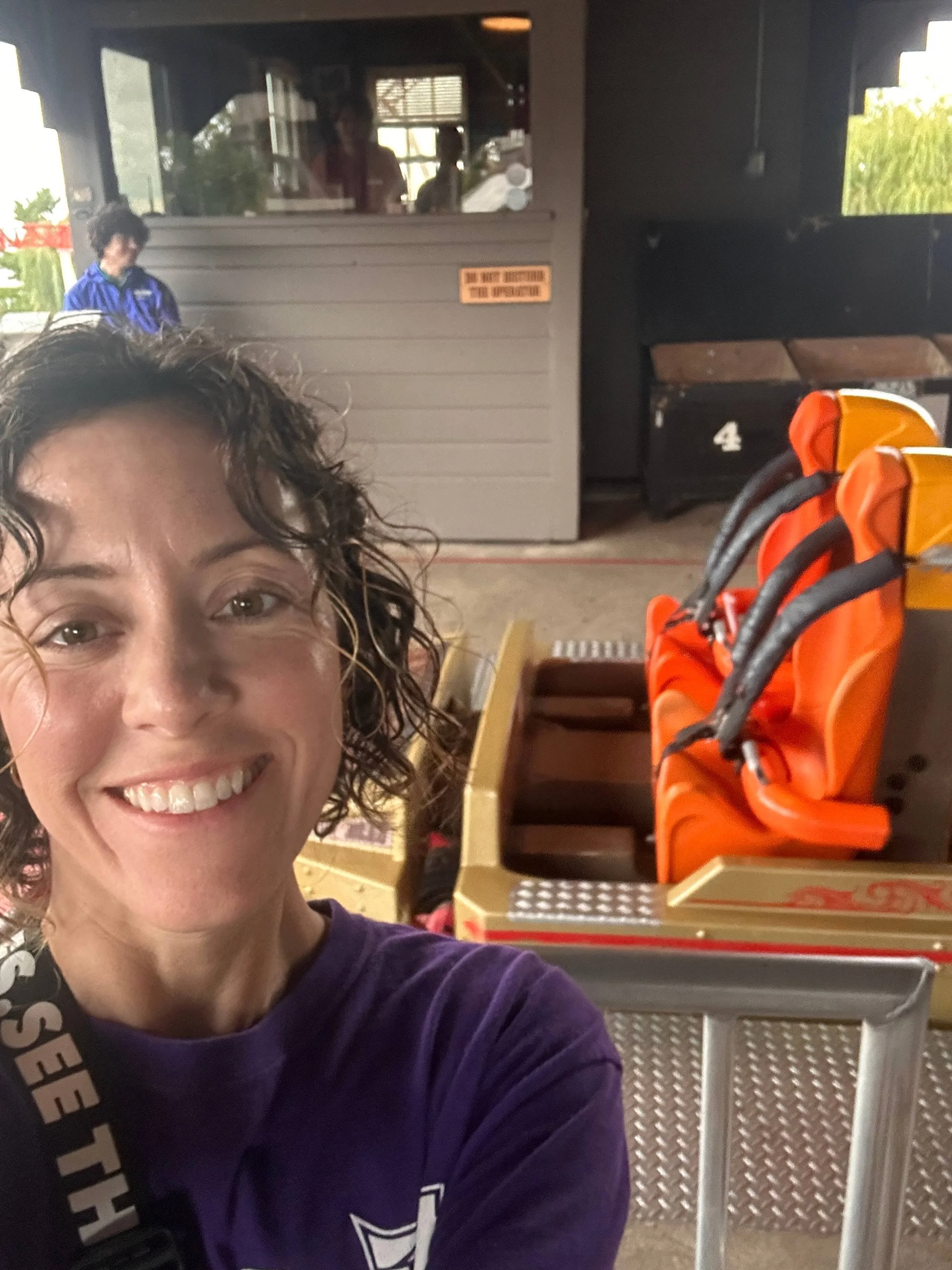
I was next in line when the ride temporarily closed because of rain! September 12, 2026

Lesley riding Maverick after a rain delay September 12, 2026
Managing your emotions, not just your investments
Sometimes the hardest part of investing isn’t managing your investments. It’s managing yourself while your investments do their thing.
Sometimes the timing that looks best really isn’t— precisely because it looks best to everyone else, too.
When you base your investing strategy on long-term trends rather than short-term fluctuations, you no longer look for the best times to get in and out.
You opt out of the moment-to-moment panic and excitement.
Your success depends on the trend over decades instead of hours.
So your chances of success are higher. And you can look forward to years of strengthening your money in order to strengthen what matters.
