
The Third and Final Behavior of Budgeting: Direct Your Money
Key Takeaways
Directing you money means creating target amounts for your expenses and aiming for those targets throughout the month.
Throughout the month, you adjust your plan as needed—reducing one category, increasing another, and adapting to what life brings.
The goal is to make sure you bring in more than you spend and ultimately designate a purpose for every dollar.
When you think of improving your finances, many of you think: budgeting.
But strengthening your financial life is so much more than budgeting.
When you think of budgeting, many of you think, “I could never do that. Sounds like too much work!”
But we can break budgeting down into 3 distinct, doable habits.
Budgeting is not the most exciting aspect of growing money-strong. It’s also not the best starting point for everyone.
Some say they tried budgeting and it didn’t work. I have to wonder: was “budgeting” to blame, or was your concept of budgeting inadequate?
What someone calls “budgeting” differs completely from another’s understanding.
That’s why I like to give “budgeting” a thorough definition—specific enough to make an impact, while allowing flexibility and creativity in practice.
It’s a framework that’s useful for diverse, real-life humans— even those who never imagined they could get into budgeting!
In my Observe–Track–Directframework, budgeting stems from three simple actions:
Observe – look at what your money is doing
Track – record your income and expenses
Direct – send your money where you want it to go
Observation creates awareness.
Tracking creates understanding.
Once those skills feel comfortable, you’re ready for the final phase: directing your money.
What It Means to Direct Your Money
Directing your money means taking the driver’s seat.
Instead of simply watching what happens to your money each month, you begin deciding ahead of time where it will go.
You create target amounts for your expenses and aim for those targets throughout the month.
This is the stage many people traditionally associate with budgeting.
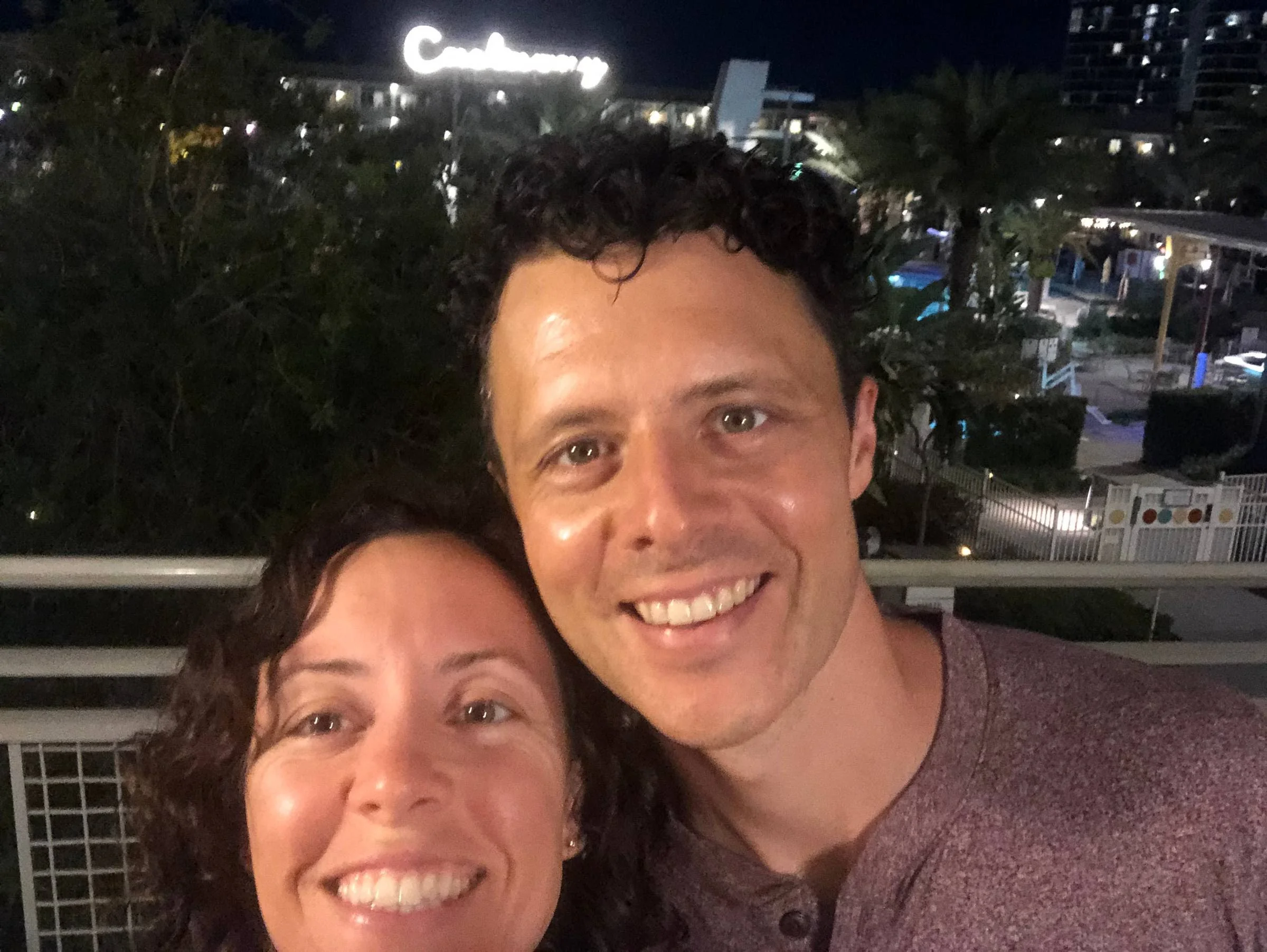
My husband and I were on vacation in Florida in September 2021. After 16 years of marriage, this was the first month we tried budgeting.
By the time you reach this 3rd stage, directing your money, you’re no longer guessing. You already understand your financial patterns.
That makes directing your money more realistic and sustainable than if you skip the first two stages.
Give Every Dollar a Job
When you direct your money, make sure every dollar has a purpose.
Each dollar you earn will eventually go somewhere.
It might go toward:
When you direct your money, you intentionally decide where those dollars will go.
Even if a dollar’s job is simply “for next month’s budget,” it still has a purpose.
Make Sure Expenses Don’t Exceed Income
Another key part of directing your money is fitting your planned expenses within your income.
Your total planned expenses shouldn't exceed the money coming in.
If they do, something needs to change.
You might:
reduce spending in one category
postpone a purchase
transfer money from savings to add as "income"
adjust your priorities
or look for ways to increase income
Directing your money allows you to make these adjustments proactively and intentionally, rather than reacting after the fact.
Plan for Non-Monthly Expenses
One of the most helpful budgeting habits is anticipating expenses that don’t happen every month.
For example, imagine you expect to pay $450 twice a year for an insurance policy. Instead of feeling surprised every 6 months, you can plan for it ahead of time.
$450 twice per year is $900 annually. Spread across twelve months, that’s $75 per month.
By designating $75 each month, your monthly plan represents your expenses more accurately, however infrequent they are. When it’s time to pay, you have the money.
Planning like this helps smooth out financial ups and downs throughout the year.
Adjust as You Go
Directing your money doesn’t mean your plan should be rigid.
Life changes. Expenses shift. Unexpected things happen.
Ongoing adjustments are part of the plan, not a departure from the plan.
Throughout the month, you adjust your plan as needed—reducing one category, increasing another, and adapting to what life brings.
This isn't just a concession. It's a key feature. Flexibility is essential for a budgeting habit to work in real life.
Inflexible, rigid, arbitrary budgets do more harm than good.
They even have financial author and influencer Ramit Sethi abandoning the word “budget” altogether.
In this YouTube video, Sethi says,
“Budgets are a waste of time… Budgets don’t work. That’s why so few people actually follow them… In my opinion, here’s why budgets fail: They’re based on restriction and guilt. You set these arbitrary numbers… and then you feel like a moral failure every time you go over them…”
The goal isn’t to set a strict limit for each spending category and stick to it no matter what. That’s not realistic.
A money plan that doesn’t work in real life is a bad plan.
The goal is to make sure you bring in more than you spend and ultimately designate a purpose for every dollar.
Give Yourself Time to Learn
If directing your money is new, give yourself at least a three-month grace period.
You are not allowed to criticize yourself, jump to conclusions, or claim failure as you try directing your money for the first time, for the first three months.
Expect to make mistakes at first.
You’ll underestimate certain expenses. You’ll forget to plan for something.
That’s part of learning. Every time you hit a snag, you gain insight into what works or doesn’t work for you.

On Beyoncé's 40th birthday, September 4, 2021, my husband and I found ourselves at Cedar Point, petting my favorite animal, a donkey! As if it couldn't get any better, this also turned out to be the month we changed our lives by budgeting for the first time.
The first month my husband and I tried budgeting was September 2021. By the end of the month, we had spent more than we earned. Oops!
I felt too hopeful to get upset by that. The error was overshadowed by the relief and excitement of trying a new habit I had previously dreaded.
Budgeting is a skill that improves with practice.
Over time, you’ll become more accurate and more confident.
Budgeting Defined
My Observe-Track-Direct framework replaces vague, incomplete, contradictory definitions of budgeting.
Not only do we have a clear definition of full-fledged budgeting, we also have a broad definition.
When financial educators say, “You don’t need a budget,” they mean you don’t need a rigid, cumbersome, impractical, or confusing habit in order to implement a great plan that works for you.
You don’t need to call it the “b” word, especially if it carries negative connotations!
Maybe your plan is your
cash flow plan
spending system
financial freedom framework
money strength builder
pockets full power program
bugét (à la “Targét”)
Name it something that draws you in rather than pushes you away.
Whatever you call your system, incorporate the 3 habits of budgeting— observe, track, direct— and you’ll do well!
Telling Your Money Where to Go
The final phase of the Observe–Track–Direct budgeting framework is where everything comes together.
You’ve observed your money.
You’ve tracked it.
Now you can guide it.
Instead of wondering where your money went, you begin telling it where to go.
And once you experience that level of clarity and control, something changes.
You see your money as a powerful tool for supporting the life you want.
As you feel in control of your money, you’ll never want to be controlled by it again.
You’ll direct your money toward what matters to you, growing more money-strong every day.
