
The Emperor’s New Clothes and the Courage to Spend Differently
Have you ever watched everyone around you buy something and wondered why?
Maybe it’s a kitchen renovation, a trendy travel mug, a sugary drink, or an overseas trip. Everyone else seems to love this stuff, so I guess you should, too.
But what if you don’t?
The Emperor’s New Clothes
I love the story of The Emperor’s New Clothes.
Scammers manipulate an emperor into believing they make magnificent clothing from special fabric. They say the material looks invisible to anyone incompetent or foolish.
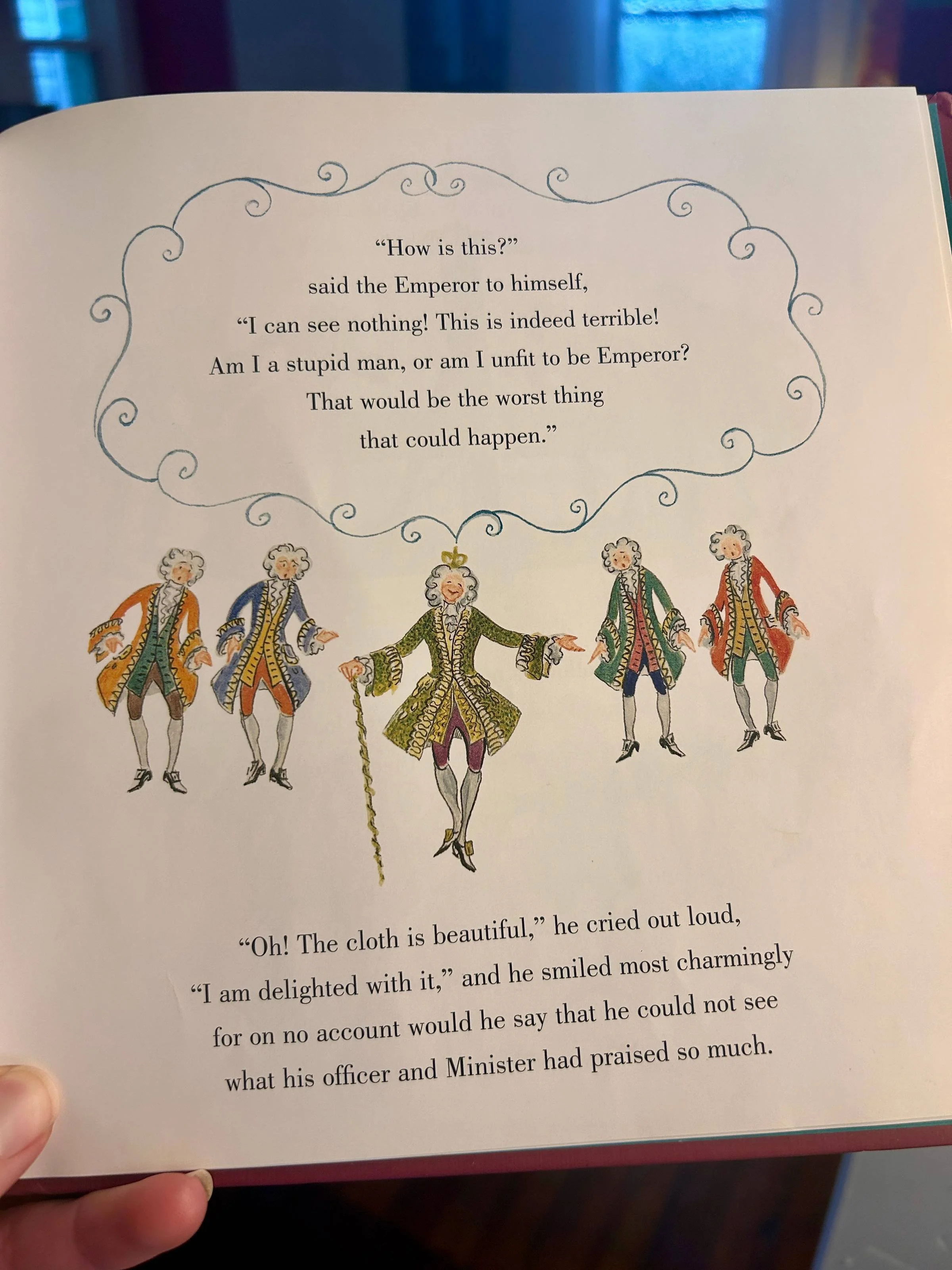
"How is this?" said the Emperor to himself, "I can see nothing! This is indeed terrible! Am I a stupid man, or am I unfit to be Emperor? That would be the worst thing that could happen." "Oh! The cloth is beautiful," he cried out loud, "I am delighted with it," and he smiled most charmingly for on no account would he say that he could not see what his officer and Minister had praised so much.
But the tricksters don’t sew new clothes; they simply go through the motions, pocketing the valuable thread they’re handed.
Everyone assumes the premise: not seeing the clothes signals stupidity. So everyone pretends to see and admire the emperor’s new clothes. To admit otherwise would bring social condemnation.
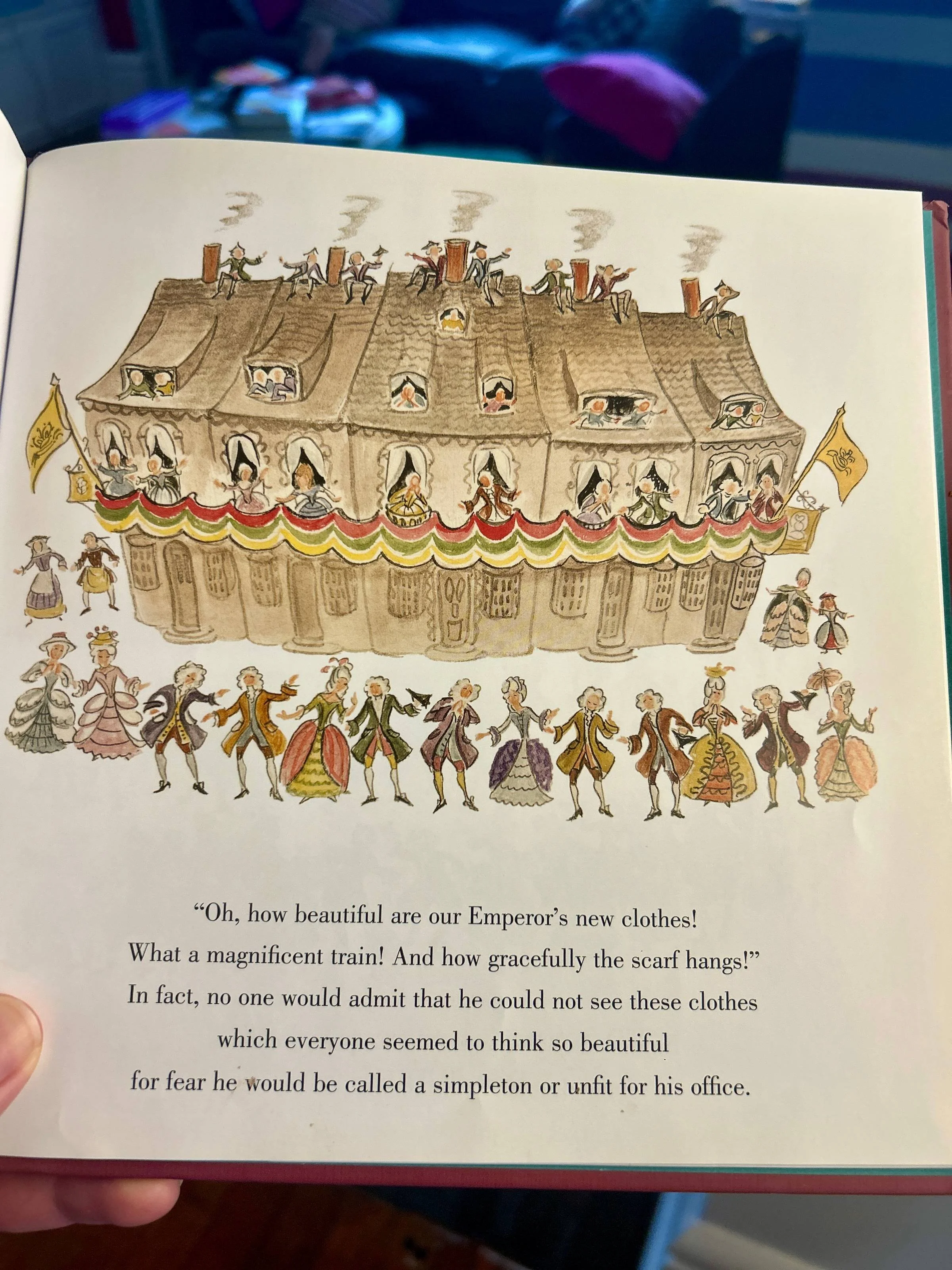
"Oh, how beautiful are our Emperor's new clothes! What a magnificent train! And how gracefully the scarf hangs!" In fact, no one would admit that he could not see these clothe which everyone seemed to think so beautiful for fear he would be called a simpleton or unfit for his office.
The emperor’s new clothes aren’t just invisible to certain inferior people; they aren’t there at all!
A child says what everyone else is thinking: He’s not wearing anything!
Sometimes everyone around us seems to agree that something is valuable. So we might try to go along with the consensus.
I like to ask myself: "Do I see something magnificent, or is this the emperor's new ___ (cup/ pants/ toy/ anything)?"
You’re Allowed to Say, “I Don’t See It.”
Financial strength grows when you learn to own your preferences and admit, “I don’t see value in that.”
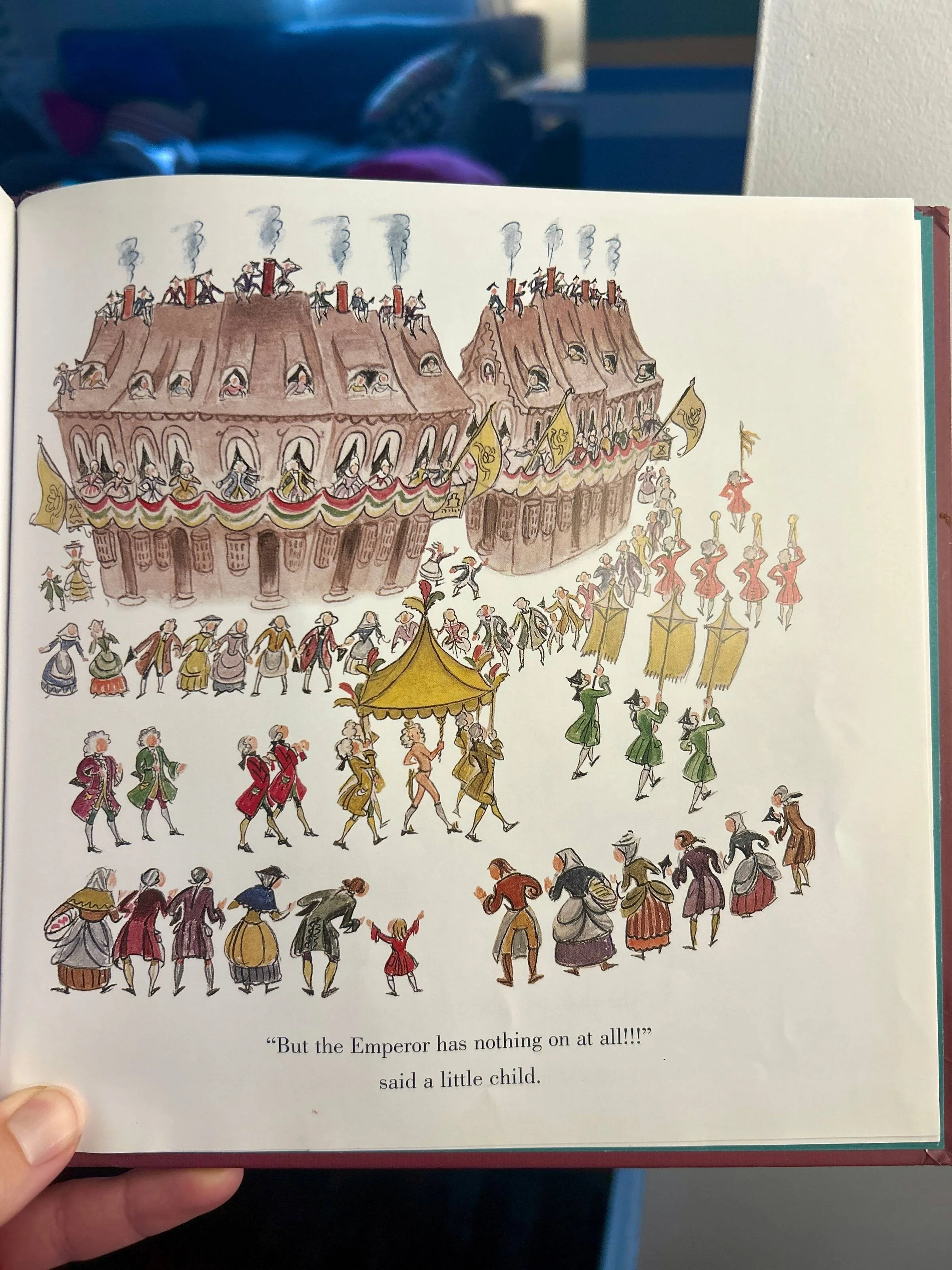
"But the Emperor has nothing on at all!!!" said a little child.
Not, “That’s stupid!“ or “People who buy that are wasting their money,” but “I don’t prefer to spend my money in that way.”
This is where the analogy breaks down. The emperor had no clothes, whereas people around you spend their money on real items; you just don’t see the allure.
For example, maybe…
your neighbor loves her brand-new luxury SUV. Great! The features, comfort, safety, and driving experience are worth the money to her. That doesn’t mean they are worth it to you.
your friends love expensive restaurants. You prefer cooking at home.
your sister thinks a huge house is worth every penny. You spend less on housing so you can travel more.
your coworkers upgrade their phones every year. You keep yours until it starts glitching.
your family says a Cancun all-inclusive is the ultimate, whereas you’d rather visit relatives.
None of these choices is inherently right or wrong.
For growing money-strong, the crucial question is: What matters to you?
Money is a tool. Its value comes from what you use it to accomplish.
When you know what matters to you, you can direct your money toward those things instead of unconsciously spending it on whatever happens to be popular.
Read related articles:
5 Questions to Reveal What Matters Most in Your Financial Life
There's Only One Right Way to Pay Off Debt (and Everyone Agrees)
Net Worth is Invisible: Why Real Wealth isn't What You SpendSpending with Intention: How to Align Your Money with What Matters
Your Money Doesn't Give You Value: You Give Your Money Value
The Power of Being the Odd One Out
It takes guts to be the one person in your circle who says, “No thanks. That’s not worth it to me.” You might feel awkward.
Maybe for a season of your life, you drive the older car, skip the expensive vacation, buy used furniture, or live in a smaller house than you could technically afford.
Maybe you don’t prioritize having the newest phone. Maybe you decide that eating out five times a week isn’t worth the money, because traveling with your family is.
These choices might look strange from the outside.
But remember: other people only have a partial view of what you purchase— and your spending doesn’t tell the whole story.
They get to make their money choices, and you get to make yours.
They don’t know what you want your money to make possible. They don’t know what freedom and optionality mean to you.
They don’t see your savings account or your investments balance. They don’t know your net worth. Net worth is invisible.
They can’t see your wealth growing stronger— to strengthen what matters more to you than the emperor’s new stuff.
What If You Redirected the Money?
Every time you decide not to spend money on something, you create an opportunity to put it elsewhere.
Maybe you…
save for something you really want.
invest it, buying yourself options and flexibility in the future.
Your financial life is about so much more than spending.
Money is energy. It represents your time and effort, and you get to decide where to direct that energy.
When “Weird” Is Good
Dave Ramsey encourages people to be “weird” with money because “normal is broke.”
In his book Set for Life, Scott Trench writes:
Here in America, people tend to have a fixation on wanting and getting "the best." Those who take a position to not settle for anything less than the best (when it comes to consumption, at least) are robbing themselves of valuable years of their lives. "The best" is ridiculously expensive and, quite often, imperceptibly better than "quite good."
"The best" wine might cost hundreds or thousands of dollars a bottle, whereas cheap wine might be $8 a bottle. Who's happier at the end of the bottle? A 40-inch HD TV might cost $250. The same TV in 4K Ultra HD might be $2,500. Even if the picture is marginally clearer, is the experience ten times greater...? This logic applies to almost every consumption choice available. Computers, smartphones, cars, clothing, jewelry, gyms, airline classes, seats at the ball-game, and more all have low- and high-cost options.
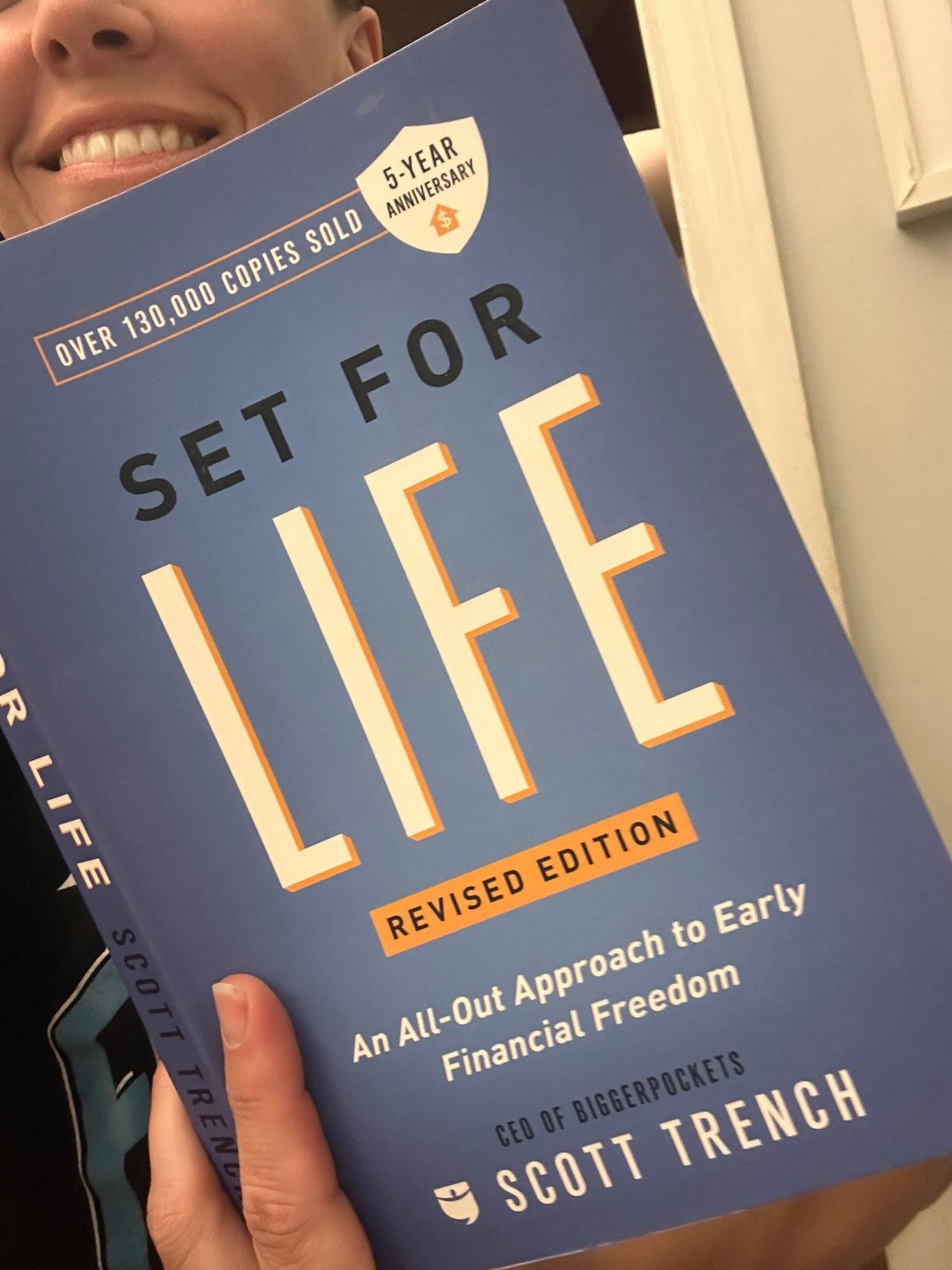
Set for Life by Scott Trench
The point is not that spending less is always the best choice, but that in so many areas, you can choose whether you want to dial your spending up or down. You don't just have to mimic the spending choices of those around you. When you see your choices clearly, it's like sitting down to operate the control panel of your financial life, directing your future.
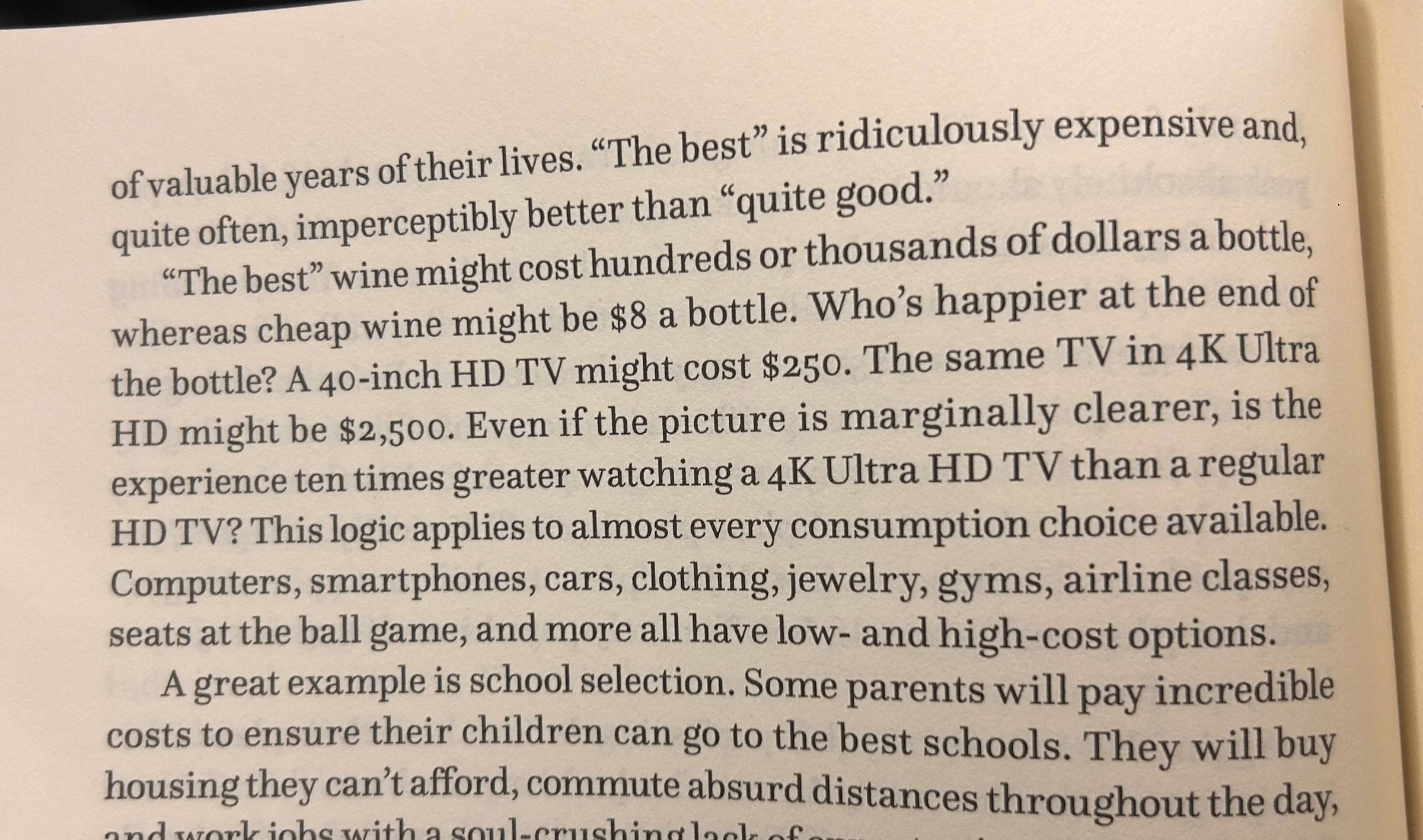
Set for Life by Scott Trench
If "normal" means spending more than you earn, not having enough savings, and financing stuff you can’t afford, then you don't want normal.
You don’t have to reject people for the spending they enjoy. But you also don't have to blindly accept the assumption; just because everyone around you sees value in something doesn’t mean you have to see it too.
Show enough courage to ask: Does this matter to me? Is it worth the money it costs? What else could I do with the same money?
The Bottom Line
If your spending diverges from that of your community, you might be the odd one out.
You can stay connected in your meaningful relationships while also buying different stuff. When you skip the cost of popular purchases, you might pay the price of some momentary embarrassment.
But on the other side of a bit of self-consciousness, you can also experience how secure and empowering it feels to strengthen your money in order to strengthen what matters most.
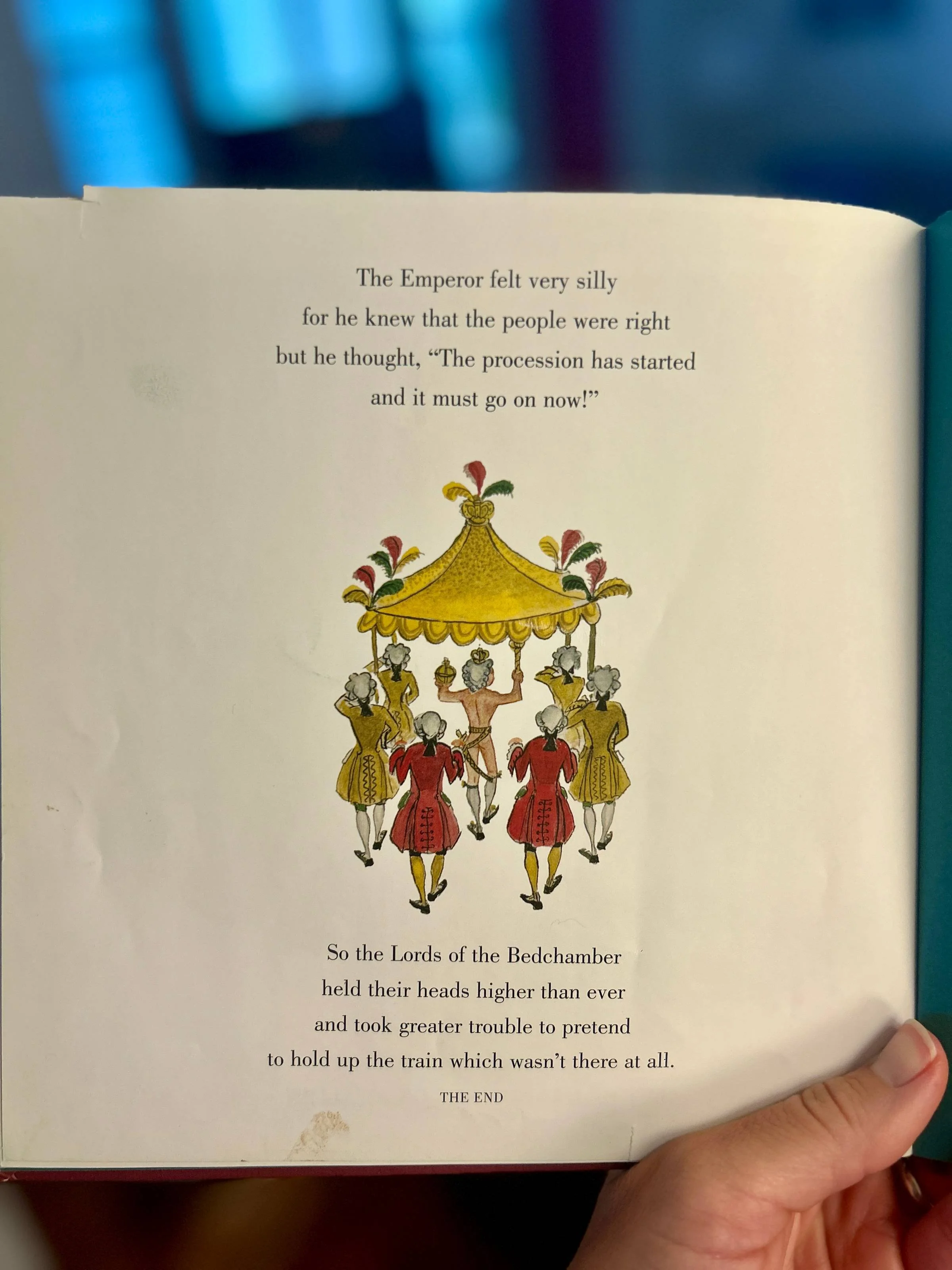
The Emperor felt very silly for he knew that the people were right but he thought, "The procession has started and it must go on now!" So the Lords of the Bedchamber held their heads higher than ever and took greater trouble to pretend to hold up the train which wasn't there at all. THE END
Pictured here is The Emperor's New Clothes by Hans Christian Andersen (Author), Virginia Lee Burton (Illustrator)
